
Resources
Tools to build, not just follow.
Grab what sparks something and experiment!
more coming soon!
For Parents
Books
Shift How You See Learning
These aren't homeschool "how-to" books. They're the books that changed how to think about learning, potential, and what education could be.
Free to Learn | Peter Gray
An absolute must! The research-backed case for why play isn't a break from learning. It IS learning. Gray explores how children are biologically designed to educate themselves through self-directed play and exploration. This one fundamentally shifted how I see my role.
Visual Thinking | Temple Grandin
Grandin makes the case that traditional education screens out the very minds that change the world. If your child thinks in pictures, patterns, or objects rather than words, this book will help you see their strengths, not their “deficits”.
The End of Average | Todd Rose
The science of why designing for the "average" learner means designing for no one. Rose dismantles the myth of average and shows why personalization isn't a luxury. It's how learning actually works.
The Whole-Brain Child | Daniel Siegel & Tina Payne Bryson
A practical guide to how children's brains develop and what that means for how we connect with them. Helpful for understanding why your kid melts down and what's actually happening neurologically.
Originals | Adam Grant
How non-conformists move the world. Grant's research on creative thinkers and change-makers is a reminder that the kids who question everything might be onto something. No one knows what the future holds, but we do know that we need people who can guide a positive future with innovative ideas.
The Call of the Wild and Free | Ainsley Arment
Permission to build something beautiful and unconventional. Arment's book is equal parts philosophy and inspiration for creating a life of learning rooted in nature, adventure, and wonder.
A Thousand Brains | Jeff Hawkins
A fascinating exploration of how the brain actually builds knowledge: through models, predictions, and constant updating. Dense but rewarding if you want to understand the neuroscience beneath how we learn.
Rebel Ideas | Matthew Syed
“Neurodiversity” isn’t an outlier. It’s the nature of human brains: all of our brains work differently. Why cognitive diversity matters is more than individual genius. Syed's work on collective intelligence changed how I think about building learning environments and why different minds need different paths.
Articles & Research
The Science Behind the Philosophy
No need to start your journey from scratch. These are reputable sources to build a foundation of first principles for homeschooling.
"The Role of Play in Human Development" | American Journal of Play https://www.journalofplay.org/
Peter Gray and other researchers explore the evolutionary and developmental importance of self-directed play. The journal itself is a goldmine for evidence-based perspectives on learning through play.
"Self-Determination Theory and the Facilitation of Intrinsic Motivation" | Deci & Ryan https://selfdeterminationtheory.org/
The foundational research on why autonomy, competence, and relatedness drive deeper learning and motivation. This is the science behind "agency > assignments."
"The Science of Learning" | Deans for Impact
https://deansforimpact.org/resources/the-science-of-learning/
A clear, accessible summary of cognitive science research on how learning actually works. Free PDF. Worth printing and keeping nearby.
"Embodied Cognition and Learning" | Educational Psychology Review
Research on why movement and physical experience aren't separate from thinking—they're part of it. Supports the "learning happens anywhere" principle.
iCivics
Founded by Justice Sandra Day O'Connor. Free, high-quality games and resources for civic education. One of the best examples of learning through doing rather than memorizing, (especially since memorization is only “use it or lose it” and usually brain-dumped.)
Johns Hopkins Institute for Education Policy - Homeschool Hub https://education.jhu.edu/edpolicy/policy-research-initiatives/homeschool-hub/
Rigorous, non-partisan research on homeschooling trends, outcomes, and policy. Helpful when you need data, not opinions.
For Kids
Screens have their place. So do hands, mud, circuits, and things that break.
We’ve curated a collection of our favorite places to get hands-on exploration tools: the stuff that actually gets used at our house, not just purchased with good intentions.
Local Pro Tips
Make resource-building an enjoyable experience by building together with your learner.
Check out these local opportunities!
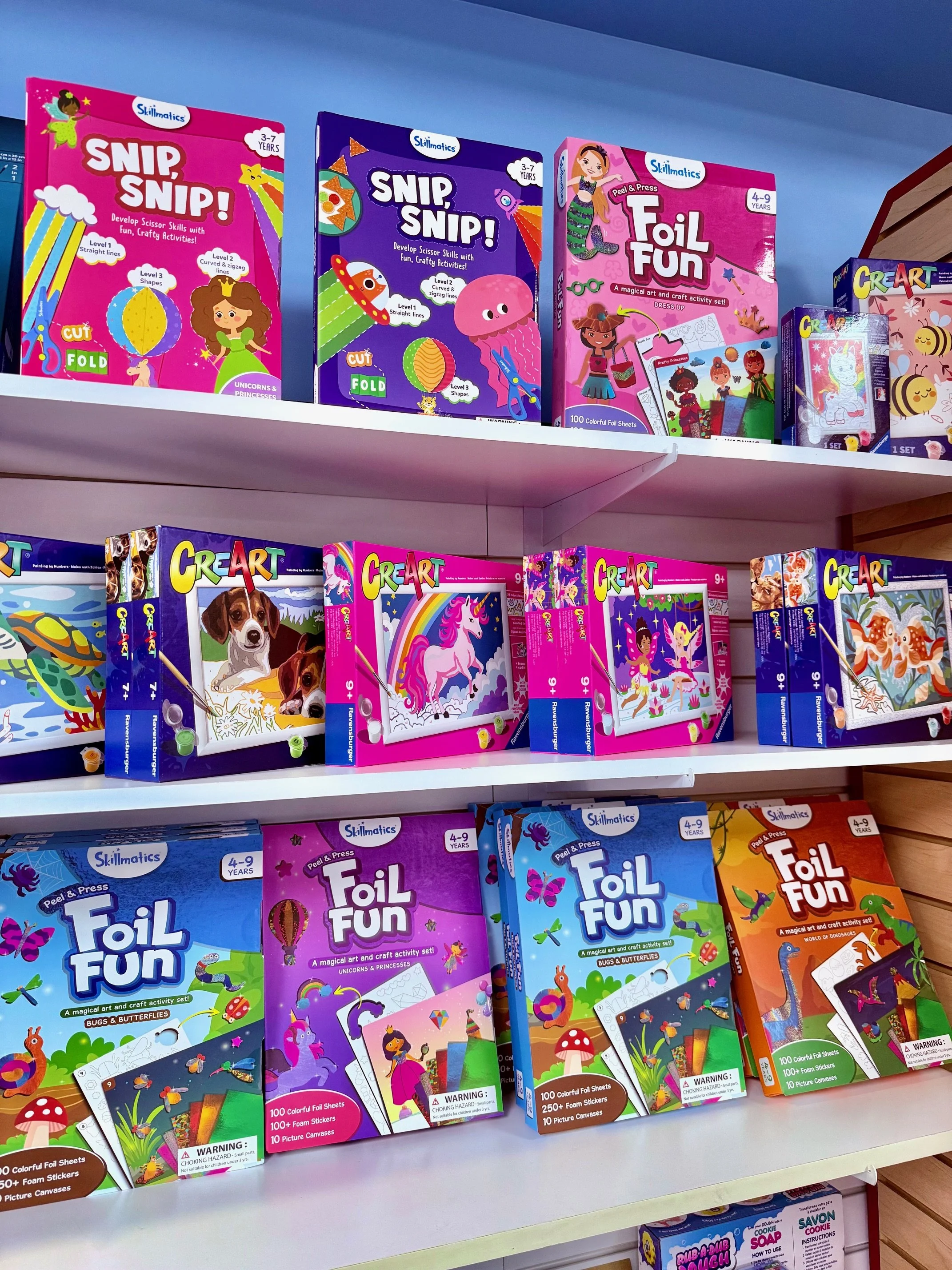
Create and practice dexterity
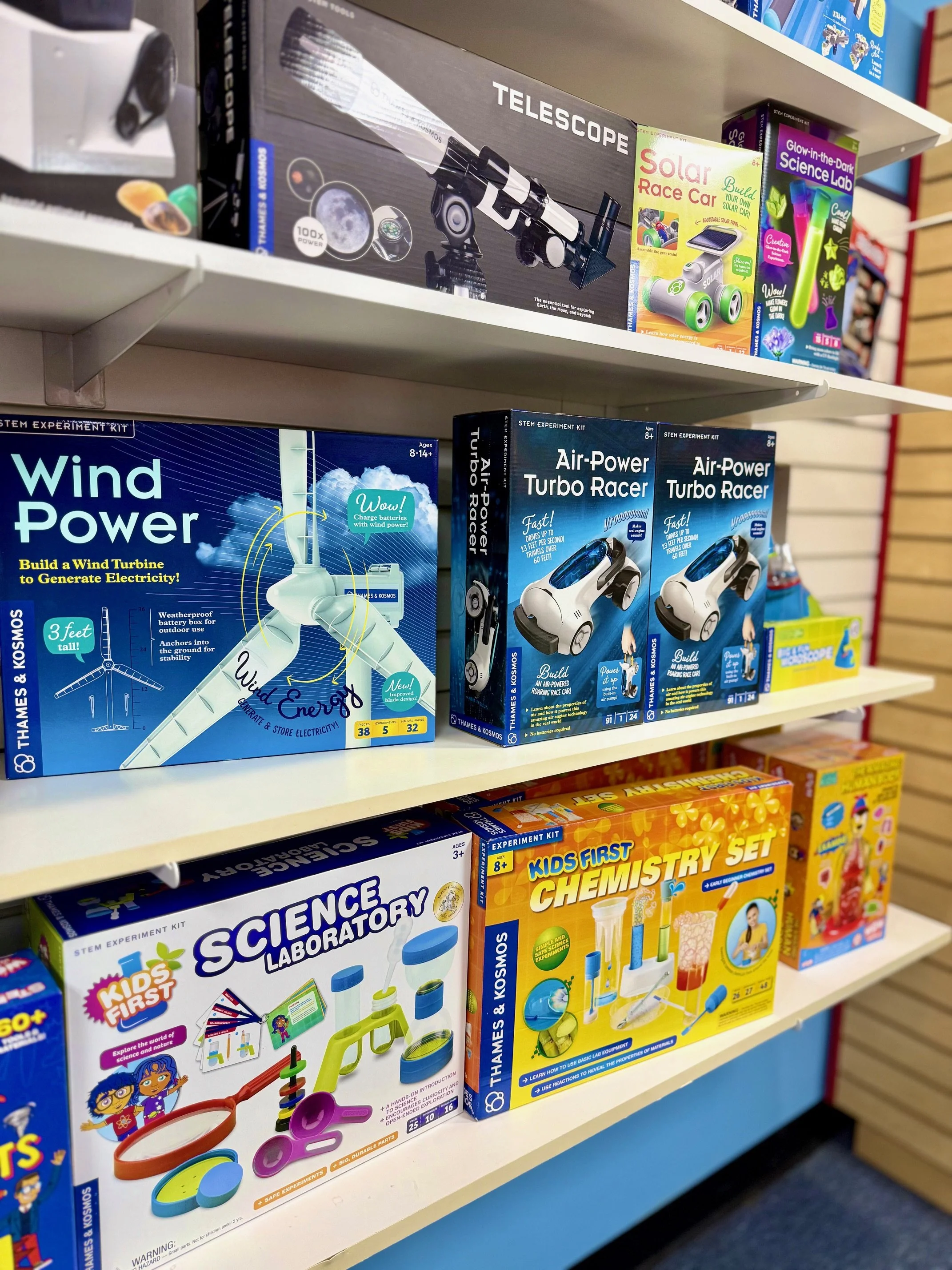
Experiment and build
The Toy Shop
A Downtown Southern Pines Original
117 NW Broad Street, Southern Pines, NC | thetoyshopnc.com
This historic anchor to downtown Southern Pines is more than a toy store. It's a learning lab disguised as a shopping trip.
The Toy Shop offers a friendly, safe environment where kids can practice real-world skills like budgeting, decision-making, and making purchases on their own. The staff is warm and patient, making it a great first "independent shopping" experience.
What we love: The shop is responsive to local interests and regularly refreshes its hand-picked inventory. You'll find a healthy selection of hands-on learning toys, especially in science, engineering, art, and dexterity-building activities. It's the kind of place where curiosity leads and screen-free play wins.
Homeschool Perk: 10% discount for homeschool families!
It's Not Rocket Science
Space & Science in the Heart of Downtown
Next to Sunrise Theater, Southern Pines
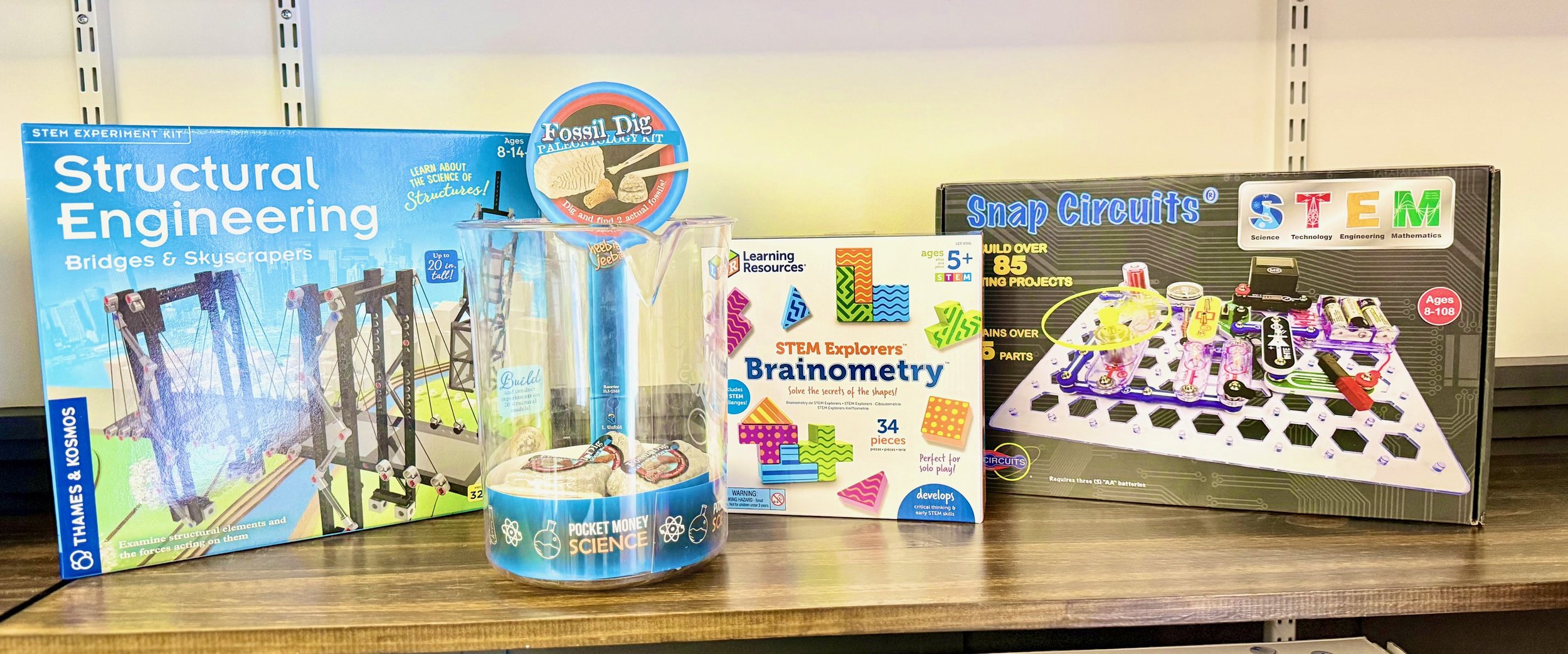
For the space-obsessed, future-engineer, or science-curious kid, this shop is a goldmine. It's Not Rocket Science specializes in space and science-themed toys, kits, and gifts.
A great stop before or after a movie, or as a destination for hands-on exploration fuel.
Free Online Learning Environments
Hands-on and interactive only.
Code.org - https://code.org/
Free coding courses for all ages. Self-paced, game-like, and genuinely well-designed. A great entry point for computational thinking.
Scratch - https://scratch.mit.edu/
MIT's free platform where kids create interactive stories, games, and animations. Less about following instructions, more about building and experimenting.
PhET Interactive Simulations- https://phet.colorado.edu/
University of Colorado's free science and math simulations. Want to understand circuits, gravity, or fractions? Just let them play around with the simulators and learn through doing and noticing. Fun and functional.
TED-Ed - https://ed.ted.com/
Short, animated lessons on everything from history to biology to philosophy. Great for sparking curiosity or going deeper on something they're already interested in. I make a curated list that I think my son will enjoy the best and keep them on hand for morning warm-ups.
Typing.com - https://www.typing.com/
Free typing lessons. Practical skill, self-paced.
CK-12 - https://www.ck12.org/
Free textbooks, simulations, and practice problems across subjects. Useful when you need to fill a specific gap without buying a full curriculum.
NASA Kids' Club - https://www.nasa.gov/learning-resources/for-kids-and-students/
Games, activities, and resources from NASA. If your kid is space or engineer-obsessed, start here.
iCivics - https://www.icivics.org/
Games and videos that teach how government actually works. Engaging enough that kids choose to play them.
Mystery Science - https://mysteryscience.com/
Video-based science lessons with hands-on activities. Some free content available; full access requires subscription.
National Geographic Kids - https://kids.nationalgeographic.com/
rticles, videos, games, and photos. Good for feeding curiosity about animals, geography, and the natural world.
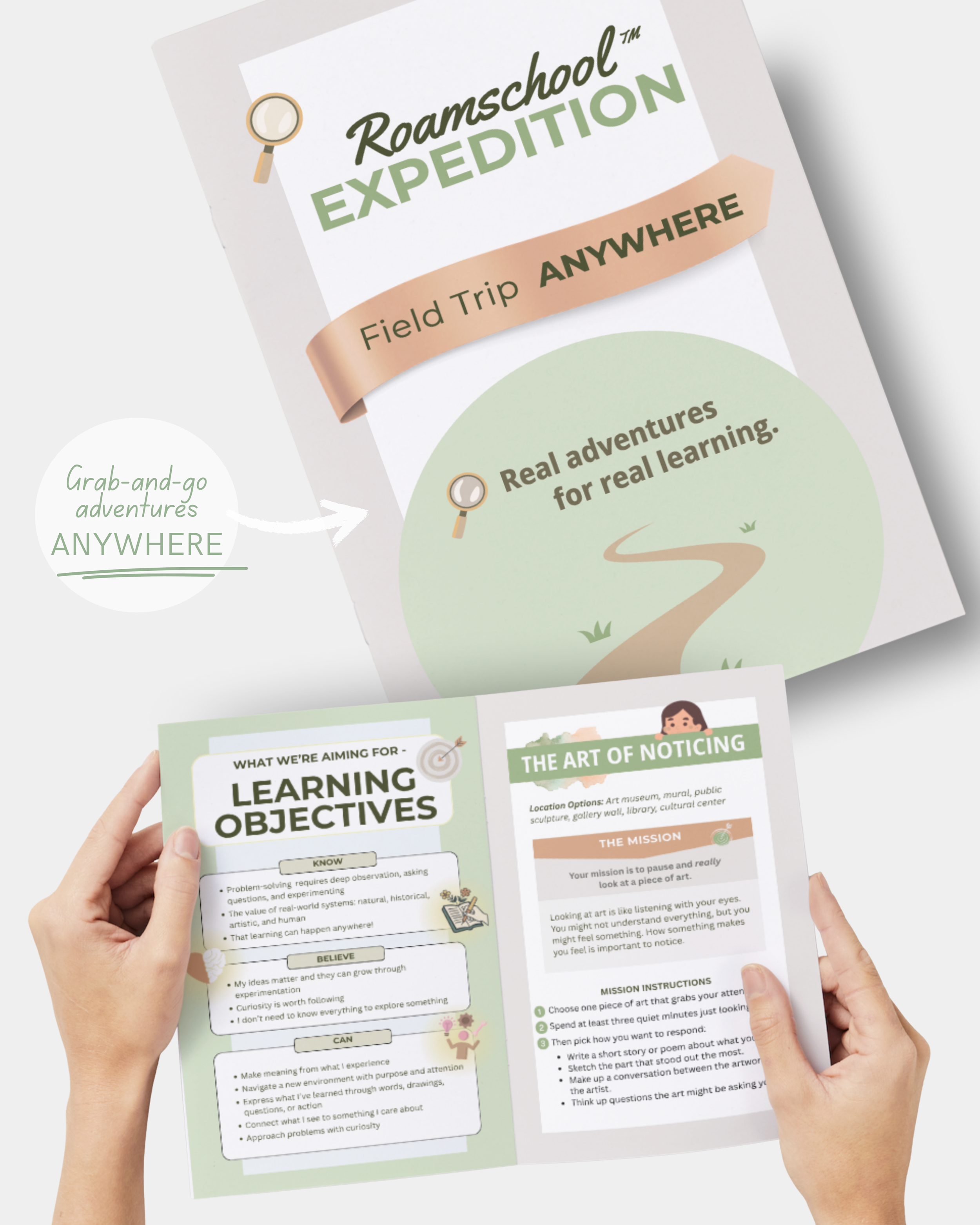
Real learning happens in real life.
Instantly turn every day outings into learning adventures.
Just print, go, and grow!